

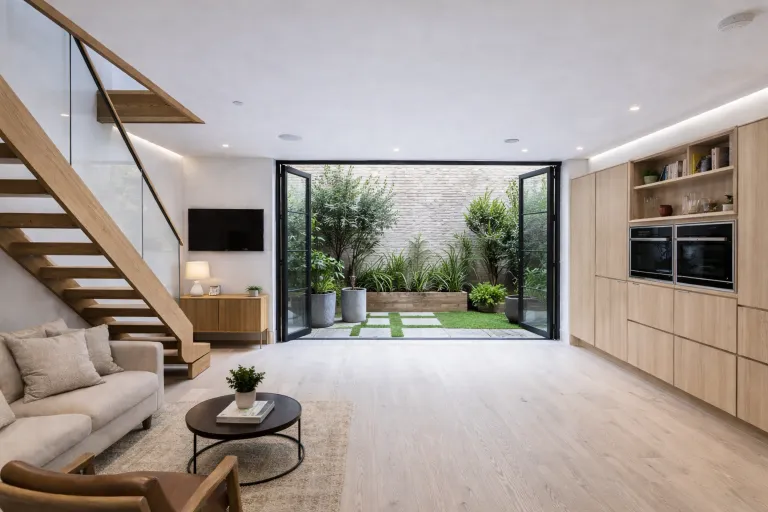
What Is a Basement Conversion?
Why Choose a Basement Conversion?
- Increase internal floor space without changing the footprint
A basement conversion adds usable living area beneath the home, ideal where planning constraints or limited outdoor space make above ground extensions difficult. - Create high value rooms tailored to modern living
Basements are commonly used for a family room, guest bedroom and ensuite, home office, gym, cinema room, utility space, or storage, depending on the layout and head height. - Add long term property value and market appeal
A well designed basement conversion can significantly increase the value of a property by delivering additional high quality accommodation and improving how the home functions overall. - Improve the home’s layout and flexibility
Adding a basement level can reduce pressure on existing rooms and allow the ground floor to be reconfigured more efficiently, supporting open plan living and better circulation. - Maximise performance through a properly engineered solution
Basement projects require careful coordination around structure, waterproofing, ventilation and Building Regulations compliance. When designed and delivered correctly, a basement conversion provides a durable, comfortable space built for long term use.
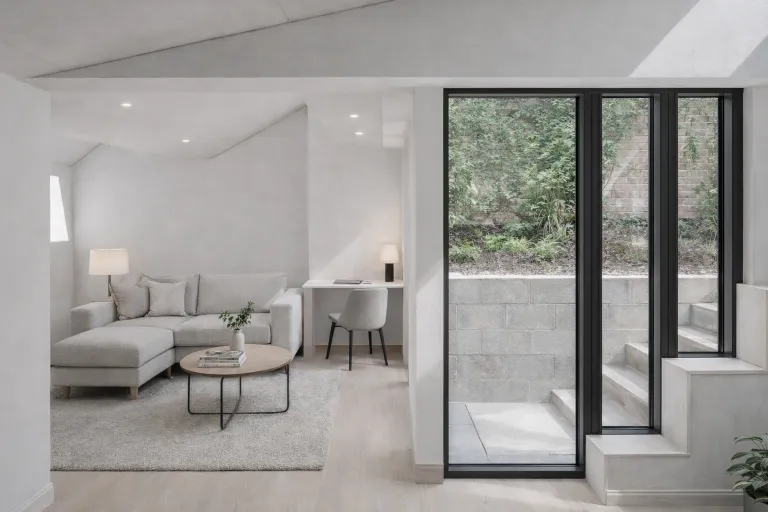
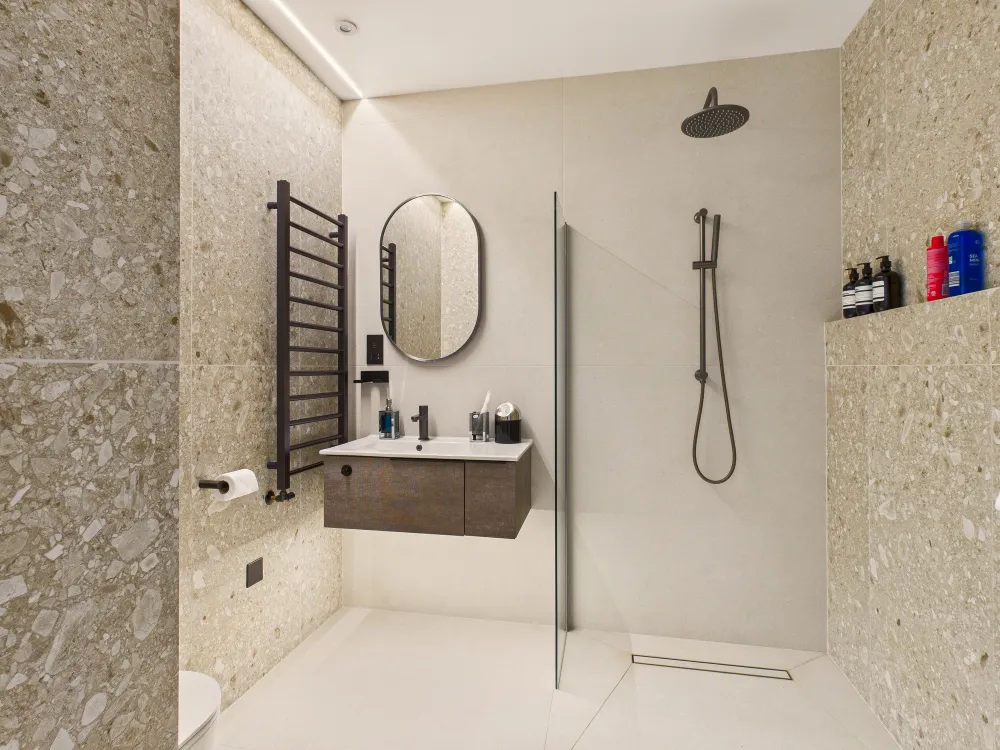
Our Approach To Basement Conversions at Salstan Architecture?
Our Process Explained in Six Easy Steps
Step 1 - Your 3D Site Survey
An appointed surveyor will come around for a full measured survey of your property. They will also note down all your desired requirements for your proposal.
Step 2 - Drawings Initiated
Step 3 - You Review It
Step 4 - Submission & Decision
Step 5 - Technical Design
Step 6 - Construction
What Our Clients Say About Us
Trustindex verifies that the original source of the review is Google. We used Salstan for architectural drawings and building work. Elyas and team are trustworthy, efficient, friendly and understanding. One thing that didn’t go unnoticed is how they don’t charge extra for some petty things like other builders would. From the first discussion we had with Elyas he put us at ease and we really felt like he had our best interests at heart and was genuine. We wouldn’t hesitate to use his team again and wish the company the best for the future! Dan and TracyTrustindex verifies that the original source of the review is Google. I appointed Salstan Architects for my planning submission and building control application for my garage conversion project. Ibbad was the lead architect and coordinator, and he was outstanding—highly experienced in handling the full dossier, layout plans, and overall design process. His team was equally professional and knowledgeable, including a very competent structural engineer who designed the lintel for the new door opening as part of the integral garage conversion. Their layout design and structural calculation provided essential insights and clear guidance for my builder throughout the project. Most importantly, their professional advices and support guided me successfully through the building control process, resulting in final completion approval from the inspector. I highly recommend Salstan Architects for their expertise and professional services.Trustindex verifies that the original source of the review is Google. We used Salstan for our basement conversion and they were excellent, would definitely recommend and use again.Trustindex verifies that the original source of the review is Google. We have just finished our project with Salstan Architecture, and we couldn’t be happier. Being a family of 6 with 4 children, we desperately needed extra living and dining space. We didn’t have experience of building, and the whole project seemed extremely daunting to us. We came across Salstan Architecture on google, initially just to help us with our design, but we immediately felt at ease and in good knowledgable hands. What we liked about Salstan, was how they were open to our ideas and listened to our wishes. We had spoken to other building companies who wanted to build their way and not the way that we would have liked. Ibbad and Elyas from Salstan listened, offered us professional advice, and we just found them so accommodating and friendly. When they informed us that not only did they offer planning, architecture and structural engineering services, but that they could also compete our project and build, we were over the moon and couldn’t wait to begin. The whole team have full comprehensive knowledge and understanding of every intricate detail and query that we ever had, and as a busy working family, we were so grateful to have Salstan building and managing our project. As with any build, we came across minor obstacles, however no matter the day or time, Salstan were in reach, and they assisted us each and every time. The communication was fantastic from start to finish, and that was really important to us. Each phase of the construction was finished on time, and we were always on track to finish at the agreed date. The tradesmen were fantastic. They were friendly, respectful, truly knowledgeable and great at their jobs. They were also great with the kids and our 3 year old was sad to see them go! All in all, I would, and have, recommended Salstan to anyone thinking of completing a building project. I am so glad to have found this company, and we couldn’t be happier with our new home.Trustindex verifies that the original source of the review is Google. Excellent local firm. Used them for my lift conversion project. Had demonstrable experience in dozens of similar build project in the local area. Gave great advice on layouts and fessibility of different options. The set of drawings included 3D views from different angles allowing me to visualuze the finished project. The handled plans, calculations, and planning process. They did not quibble when it came to making small adjustments. Gave great advise on how to handle making permitted development and planning applications either together or separate to be both cost effective and increase success. In my opinion, great value for money and and great group of people to work with. Only criticism was that the building contractor side of the business were a bit slow to quote for the work that the planning side had prepared. But all in all a great experience.Trustindex verifies that the original source of the review is Google. I was recently introduced to this company by another client of Salstan for my loft conversion project. My work is yet to start but the experience so far with Ibaad and zain has been very positive. They were very professional, honest, kept their words and got the job done on time. Ibaad replied to my queries even when he wasn’t in the country. I have already recommended my cousin to use their services and I will definitely use them again in the future.Trustindex verifies that the original source of the review is Google. Any praise I give to MM Architecture and Ibbad would still fall short of the exceptional work they’ve done for me over the past few months. I’ve already recommended Ibbad to at least half a dozen close friends and acquaintances who are looking for a capable architect. When I first approached him, I was stuck. My building’s planning permission for change of use had been rejected once, and a second application had to be withdrawn after negative council feedback. I had already invested heavily in extensions and a loft conversion, but couldn’t achieve the ultimate goal of splitting my house into apartments. My previous architects had given up, and I was left searching for someone who could actually find a way forward. After researching extensively — comparing pricing, quality of work, and meeting different architects face-to-face — I decided to place my trust in Ibbad and his team. From the outset, Ibbad was refreshingly honest about the challenges, while also highlighting the property’s potential and assuring me he would deliver the best possible design. Unlike my previous architects, he recommended submitting a pre-application. It cost a little extra, but it proved to be the right strategy and was crucial to the ultimate success of the project. Over the following months, we worked closely to create a feasible plan for all three floors, overcoming numerous legacy hurdles and navigating my budget constraints. Ibbad not only delivered a well-thought-out design on time, but also exceeded my expectations by proposing an additional flat through meticulous planning and clever use of space — significantly increasing the property’s value. He also guided me through the council’s requirements for supporting documents, including parking surveys, BNG assessments, flood risk assessments, and landscape architecture. Every time new challenges arose, he was quick to respond, always just a message away. After months of coordination with multiple stakeholders, Ibbad’s expertise and persistence led to the successful approval of a complex planning permission. I cannot recommend him highly enough — if you’re looking for an architect, you’ll be in the safest of hands.Trustindex verifies that the original source of the review is Google. Ibbad and the team at Salstan Architects have been absolutely fantastic throughout the process of designing and obtaining approvals for my HMO project. From the outset, Ibbad demonstrated a high level of professionalism, patience, and an extensive depth of technical knowledge. He didn’t just deliver what was required, he consistently went above and beyond, proactively suggesting improvements to layouts, advising on compliance issues, and taking initiative to deal with planning and other documentation efficiently. His communication was always timely and clear, and I genuinely felt like he cared about the success of the project. I’m very happy with the quality of the drawings, the support I received, and how smoothly things progressed. Highly recommended.Trustindex verifies that the original source of the review is Google. When I worked with Salstan, what stood out most was how straightforward, on the ball, they were with me. They showed me how shifts like ceiling height and floor level could drastically affect my application. Things I wouldn’t have known to consider. Planning was smooth, and their drawings were spot-on for our builder. Really grateful for their care and clarity throughout.Trustindex verifies that the original source of the review is Google. My experience with Ibbad was brilliant. The cost was justified just for the 3D design phase. We hired Ibbad & elyas for a loft conversion and rear extension. In contrast to standard flat plans, their illustrations gave us a clear idea of how the room would feel and look. They even made layout suggestions that had a significant impact, such as moving the windows to let in more natural light. Their attention to detail was evident right away, and the design phase felt collaborative. The builder found their technical drawings easy to follow, and the planning approval process went smoothly. They really provided us with genuine clarity and I recommend if you're unclear about the potential outcome of your project. If we could do it all over again, we would absolutely use them because they are professional, likeable, and pay fine attention.Verified by TrustindexTrustindex verified badge is the Universal Symbol of Trust. Only the greatest companies can get the verified badge who has a review score above 4.5, based on customer reviews over the past 12 months. Read more
Follow us on Instagram


Frequently Asked Questions
Often no for converting an existing basement internally, but yes if you are excavating to create new space, adding a lightwell, changing the outside appearance, or creating a separate unit. Building Regulations approval is still required.
There is no single fixed number that applies to every project, but you need enough clear height to create a comfortable room once structure, insulation and finishes are added.We assess head height early and advise whether lowering the floor is necessary.
Most basement projects take several months,with construction commonly around 3–5 months,depending on complexity,access,and how much excavation and waterproofing is involved.
Who we are working with